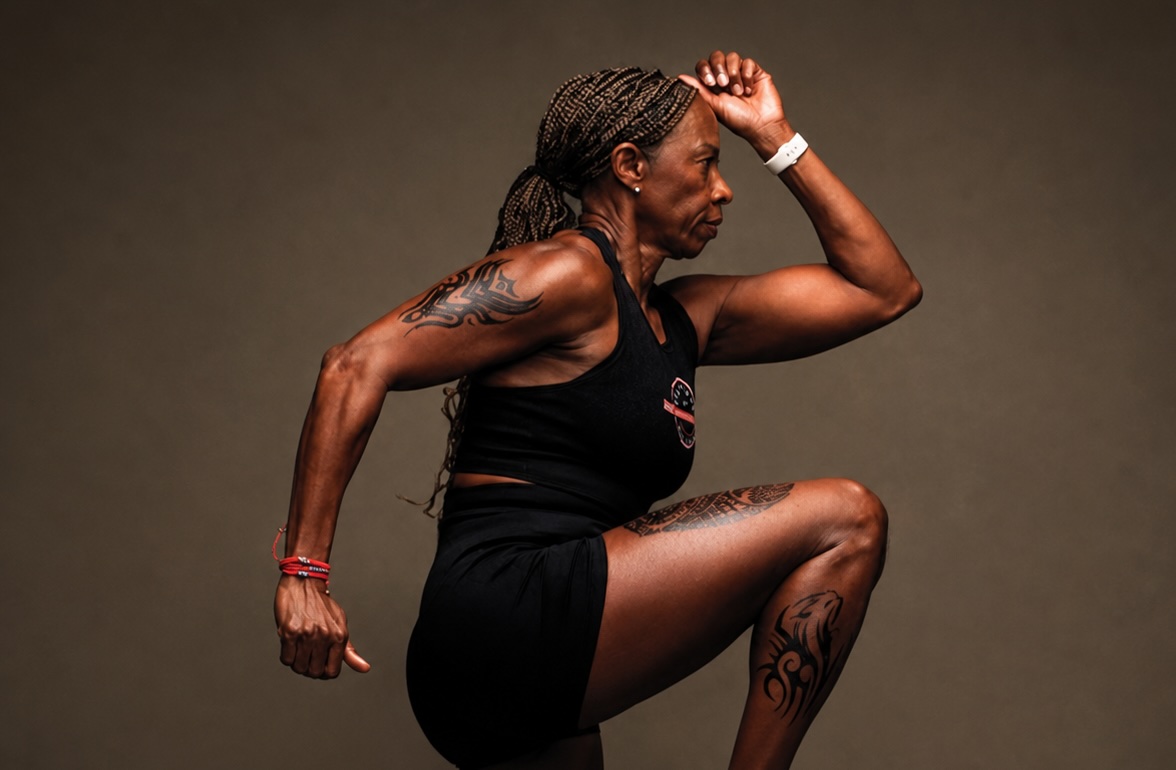






























At an age when many people assume competitive sports belong to a younger generation, 63-year-old track and field athlete Johnnie Reid is challenging that narrative one race at a time. The accomplished Black sprinter and shot put champion is not simply participating—she is running faster than she did in her 50s and approaching personal records she established more than four decades ago.
Reid’s journey offers a powerful message for athletes and everyday people at any age: the body, mind and competitive spirit can continue to evolve when supported by discipline, smart training, recovery and determination.
In 2025, Reid delivered an extraordinary performance at the National Senior Games, setting the 60–64 age-group record in the 100-meter dash with a time of 13.6 seconds, despite racing directly into the wind. Yet that record-setting run was not even her fastest recent performance. Months earlier in Las Vegas, Reid completed the 100 meters in an impressive 12.85 seconds.
“It took me 10 years and a lifetime to become No. 1,” Reid says. “Now I’m reaping the benefits. The butterflies never go away.”
From High School Promise to a New Athletic Chapter
Reid’s speed was evident decades ago while she attended Clewiston High School, where her performances attracted interest from college recruiters. But competitive running came with physical challenges. Years of training and competing on asphalt contributed to persistent shin splints, eventually leading her to step away from the sport.
She remained physically active through jogging and occasional gym workouts, but life took priority. Raising her son and managing adult responsibilities meant that competitive track became part of her past.
Then came an unexpected second chapter.
Around 2013, an old friend introduced Reid to the Senior Games, Olympic-style competitions for athletes age 50 and older held at local, state and national levels. The opportunity reignited something within her.
Returning to sprinting after decades away, however, was not easy. Reid has recalled that her legs would initially shake after completing just one sprint. Rather than allowing that early difficulty to discourage her, she approached her comeback patiently.
She rebuilt her strength, studied her technique and recorded herself during training sessions. Reid also studied some of track and field’s most celebrated athletes, including Jesse Owens, Wilma Rudolph, Usain Bolt and Sha’Carri Richardson.
She analyzed everything from starting-block technique and acceleration to body positioning and the drive phase of a sprint. One important adjustment was learning to stay lower coming out of the blocks rather than standing upright too quickly. That technical improvement helped her generate greater power and acceleration.
Six Lessons From Johnnie Reid’s Athletic Journey
- Age does not automatically determine athletic potential. Reid is demonstrating that athletes can continue improving well beyond the ages traditionally associated with elite competition.
- Starting again requires patience. Her comeback did not happen overnight. She gradually rebuilt her body after decades away from competitive sprinting.
- Technique can be as important as natural ability. Reid studies other athletes, records her practices and continually evaluates how she can improve her starts, positioning and overall performance.
- Strength and recovery work together. Her routine combines sprint training, strength conditioning and shot put practice with carefully scheduled recovery. Massage, chiropractic treatments, steam-room sessions and sauna visits are also part of her wellness approach.
- Competition can become personal rather than comparative. Reid’s philosophy is increasingly centered on improving herself instead of simply defeating another athlete. “Now it’s me vs. me,” she says.
- Longevity may be the greatest victory. Medals and records matter, but Reid’s larger goal is maintaining her health, mobility, independence and quality of life for as long as possible.
Training the Body—and the Mind
Reid’s accomplishments are particularly inspiring because they demonstrate that athletic development is not solely about youth. Her weekly routine reflects a mature understanding of performance: train hard, strengthen the body, practice technique and make recovery a priority.
“My fitness goal is to keep being better than I was yesterday,” she says.
That philosophy extends beyond competitive sports. Reid’s story can speak to the 30-year-old considering returning to the gym, the 50-year-old thinking about entering a first race, the 60-year-old exploring strength training or the 70-year-old committed to remaining active.
The goal does not have to be breaking a national record. The victory can simply be becoming stronger, faster, healthier or more confident than yesterday.
Running Toward Longevity
Reid also carries a meaningful family example with her. Her grandmother lived to 105 years old, helping shape Reid’s perspective on longevity and quality of life.
“I want to live as long as I can, as well as I can,” Reid says.
That may ultimately be the most important message behind her athletic success.
More than 40 years after showing promise as a high school sprinter, Johnnie Reid has returned to the track with greater knowledge, discipline and appreciation for what her body can accomplish. Every starting block represents another opportunity—not simply to compete against other runners, but to challenge yesterday’s version of herself.
Her story reminds us that sports do not necessarily have an expiration date. Neither does personal improvement.
At 63, Reid is still running, still learning, still competing and still chasing records. Her journey makes one thing clear: sometimes the next great chapter of an athlete’s life begins long after everyone assumes the race is over.
Learn More & Follow Johnnie Reid
Official Website: JohnnieReid.com
Follow Johnnie Reid on Instagram and Facebook for updates on her competitions, training, achievements and continuing journey in track and field.
Report Marlina Haley